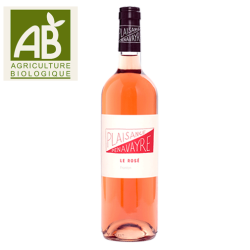
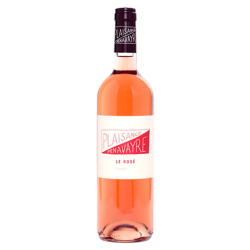
Available individually
 en
 fr


Domaine Plaisance Penavayre is a family wine estate in southwestern France, which extends over 26 hectares around the village of Vacquiers in the Haute-Garonne department, in the Fronton appellation. In addition to the emblematic grape variety, Négrette, he also undertakes to revive forgotten grape varieties such as Negret Pounjut and Bouysselet.
The estate is spread over several very distinct terroirs, to the north in the Tarn valley and further south in the Garonne valley: the plots on thin soils are well suited to the production of the "Le Rouge" and "Le Rosé" vintages, the stony boulbènes soils lend themselves better to the Négrette grape variety, for example for the "Alabets" cuvée, the red mullets of the Tarn, clay-silt soils, allow a slower ripening of the grapes, to produce the cuvées "Le Pitchou" and "Tot Co Que Cal".
At the end of the 19th century, the Penavayre family already had a wine-growing business, in addition to livestock farming and orchards, and entrusted the grapes to the local cooperative. In 1971, Louis Penavayre decided to abandon the cooperative and produce his own wines, and made the estate one of the pioneers of the Fronton appellation. In 1985, he went a step further by bottling his wines under the name Château Plaisance. In 1991, his son Marc Penavayre moved to the estate after his studies as an agricultural engineer and oenologist and decided in 2005 to launch the estate in an organic farming approach, which led to AB certification in 2011.
In 2016, the estate began to apply the principles of biodynamics. In 2019, with Thibaut Penavayre, the 3rd generation of the family joined the estate. It took the name of Domaine Plaisance Penavayre.
There are 2 products.

