LEBANON

In recent decades, the wines of Lebanon have regained favor with wine lovers thanks to a history dating back several millennia, an exceptional terroir and visionary winemakers and merchants.
The presence of vines and the production of wines in Lebanon are attested as early as the sixth millennium BC. It was then the Phoenicians, great merchants of the Mediterranean, who made Lebanese wines known in Egypt, Greece and Rome. Then, from the Middle Ages, the domination of the Ottoman Empire made viticulture forbidden, except for Maronite and Orthodox Christians. Modern viticulture was reborn in the 19th century and especially in the early 20th century under the French protectorate, with the contribution of grape varieties from the south of France, Cabernet Sauvignon, Merlot, Carignan and Cinsault in red, Sauvignon Blanc and Clairette in white, and the development of large wine estates such as Château Musar for example. It was again silenced with the civil war for more than fifteen years, until the end of the last century. Over the past 25 years, the craze for Lebanese wines has continued to grow with a vineyard that remains modest in size, and about fifty estates in total.
The main wine-producing region in Lebanon is the Bekaa Valley in the east of the country, a region truly blessed by the gods for viticulture, thanks to plateaus located at more than 1000 meters above sea level, with cool nights, with light but regular rains and protected from the winds by the mountain range of Mount Lebanon in the west, dominated by the Qurnat as Sawda at more than 3000 meters above sea level.
The best red wines of Lebanon are still produced today with the grape varieties and winemaking methods of Bordeaux wines and their organoleptic characteristics are therefore quite similar: they are the wines of Château Musar, Château Ksara or Château Kefraya. The majority of white wines are still produced from the Sauvignon and Chardonnay grape varieties, but in recent years several estates have revived ancient autochthonous grape varieties planted at higher altitudes, between 1300 and 1600 metres, such as Obaideh and Merwah. .
Sort by:
Price, low to high
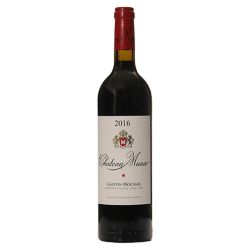
Château Musar 2016 is an exceptional red wine from Lebanon produced south of the Bekaa Valley, made from a blend of old vines with an average age of 40 years, some over 80...
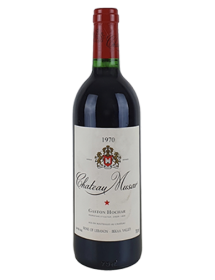
Château Musar 1970 is an exceptional red wine from Lebanon produced south of the Bekaa Valley, with a very Bordeaux style in this 1970 vintage, with a large proportion of...