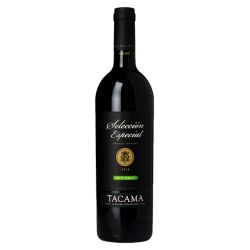
Available individually
 en
 fr

Wine producing in Peru dates back from the 16th century which makes it the oldest in South America. The Spanish conquistadors planted vines around Lima, the capital of Peru, and the vineyards expanded southwards in the next two centuries, to Ica, Arequipa, Moquegua and Tacna. By the end of the 18th century, Peruvian wine was sold across the whole of South America but one hundred years later, economic crisis and natural disasters led to the Peruvian vineyard shrinking and only surviving with the production of Peru’s traditional spirit, Pisco and sweet wines.
During the second half of the 20th centuries, Peruvian winemakers opted for two different approaches, both leading to producing great wines: one to produce wines from French and international renowned grape varieties such as Cabernet Sauvignon, Malbec, Merlot, Syrah, Tannat for the reds and Chardonnay and Sauvignon Blanc for the whites. Another to produce wines from the original Peruvian grape varieties such as Albilla (Palomino Fino), Italia (Muscat of Alexandria), Mollar, Negra Criolla (same as Chile’s País), Quebranta or Torontel.
Peru’s vineyards stretched over around 15,000 hectares with only a small percentage used to make fine wines: most vines are still used to produce the traditional Pisco and sweet wines. From North to South, from Lima, down through Ica, Arequipa, Moquegua and Tacna, all the vineyards are affected by Humboldt Current from the Pacific Ocean, and most are influenced by the high altitude (Andes) and the arid soils (Pacific coastal desert).
Over half of the Peruvian vineyards producing high quality fine wines are located in Chincha, Pisco and the Ica Valley, at an altitude of between 400 and 700 metres above sea level, with rich and deep sandy soils and an arid and subtropical climate cooled by the Pacific ocean winds. Major producers include Tacama, the oldest vineyard in South America established in 1540, Intipalka, Mimo, Ocucaje and Pampas de Ica.
In Chincha, Tabernero and Viña Vieja, one can mainly find fine wines produced from international grapes whereas in the Pisco Valley, old grape varieties are favoured. Other noticeable wine-producing areas are the Vítor and Caraveli valleys (Arequipa) with vineyards planted respectively above 1,200 metres and 1,600 metres on alluvial and clay soils. The Vítor Valley produces mainly Malbec, known there as Burdeos, Moscatel Negro del Perú and Muscat of Alexandria for whites. The Caraveli valley is renowned for its heritage in the history of Peruvian viticulture. Moquegua is another important wine-producing region, once known as the ‘Bordeaux of the Americas’ but relies nowadays on Muscat of Alexandria, Moscatel Negro, Quebranta, Syrah and Malbec. At the very South of Peru, in Tacna, vineyards are located at around 1,200 metres and produces both international and old Peruvian grape varieties.
There is 1 product.