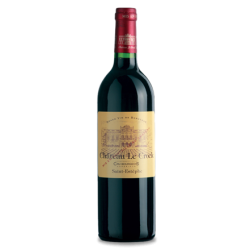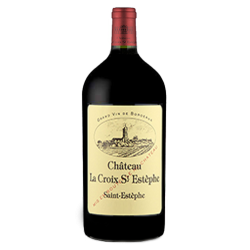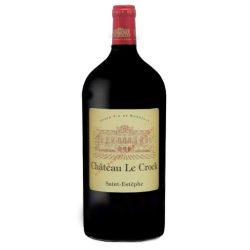
Product available with different options

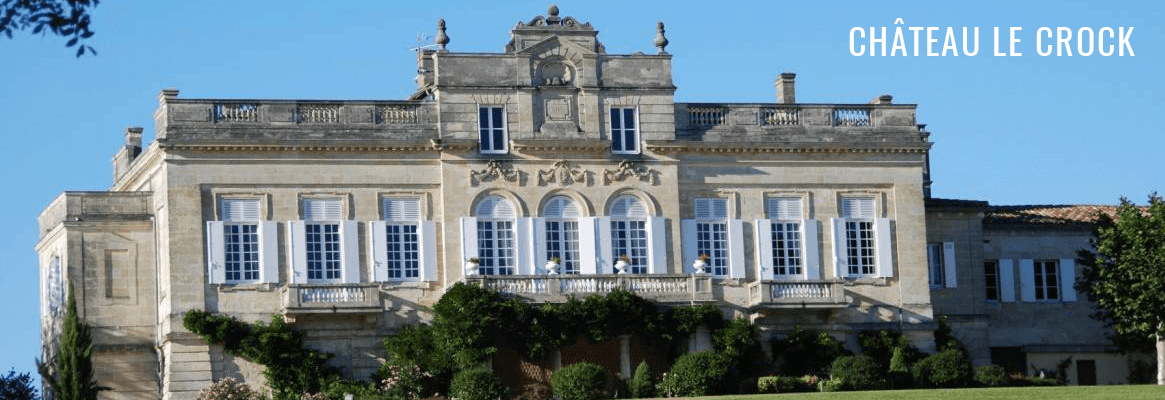
In 1913, Paul Henri and Albert Cuvelier, merchants from the North of France, acquired Château Le Crock, 1er Cru Bourgeois Supérieur de Saint-Estèphe, formerly Cru de Bastérot-Ségur. At that time, the Cuvelier family was already well-known on the Place de Bordeaux due to the foundation in 1804 of the Cuvelier trading house.
Château Le Crock benefits from the same Médoc gravel terroir as the Grands Crus Classés in 1855, The vineyard is planted mainly with Cabernet Sauvignon (60%) followed by Merlot (25%), Cabernet Franc (10%) and Petit Verdot (5%).
Château le Crock's second wine was born in 1908 with the Cru de Saint-Estèphe La Croix, which has now become Château La Croix-Saint-Estèphe.
It was in 1913, 10 years after Château Le Crock, that the Cuvelier family acquired its first Grand Cru Classé in 1855, Château Camensac, sold in 1964, and it was in 1920 that it became the owner of 2 great estates in the Saint-Julien appellation with Château Léoville-Poyferré, Second Grand Cru Classé and Château Moulin Riche, which became an exceptional cru bourgeois in 1932.
Sustainable pest management is in the spotlight at Château Le Crock to produce healthy and environmentally friendly harvests.