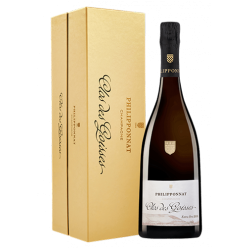
Available individually
 en
 fr

In addition to the terroir, the different types of Champagne are distinguished according to the grape varieties and their blend, the sugar dosage, the winemaking method and the vintage.
When the term Blanc de blancs or Blanc de noirs is indicated, the Champagne is made from 100% a white grape variety (Chardonnay, Arbanne, Petit Meslier, Pinot Blanc and Pinot Gris) in the first case and 100% from a grape variety with red grapes (Pinot Noir and Pinot Meunier) in the second case. In the absence of one of these 2 mentions, Champagne is a blend of white grape varieties and red grape varieties, with the vast majority of Chardonnay, Pinot Noir and Pinot Meunier grapes.
Champagne Rosé is made by macerating the red-skinned grapes or by adding a certain proportion of Champagne red wine to the blend (Pinot Noir and Pinot Meunier).
Then there is the indicative mention of the dosage of a Champagne, according to the quantity of sugar, in grams per litre (g/l), which is added to the bottle of Champagne, in the form of liqueur, after ageing and disgorging. The most common dosages today are Brut (less than 12 g/l) and Extra-Brut (Less than 6 g/l) which have replaced the Dry (between 17 and 32 g/l) and Semi-Dry (Between 32 and 50 g/l) dosages that were once preferred in the 19th and early 20th centuries.
Non-dosed Champagne, i.e. without the addition of sugar of any kind, also known as Champagne Zero or Champagne Nature, has also been popular with wine lovers for the past ten years.
The vintage is indicated on champagnes made with wines from the same year and only in high quality vintages. This is referred to as vintage Champagne. With no mention of the vintage, Champagne is made from wines from harvests from different years.
Some characteristics related to the winemaking methods of Champagne are not necessarily indicated on the label and are nevertheless important to guide the connoisseur. For example, ageing, which consists of placing the bottles on slats in the cellar for a more or less long period of time: the minimum duration is 15 months for non-vintage Champagne and 36 months for vintage Champagne, but these can be much longer for high-end cuvées.
There are 53 products.